- Governance and organisation
- Satisfied customers
- Sustainability and society
- Financials
Cookies
By clicking "Allow All", you agree to the use of cookies to enhance website functionality, analyse website usage and assist with marketing.
More on cookiesFrom the Chairman of the Board
Landsbankinn achieved strong results in 2025 across all main segments. The Bank’s annual financial statements reflect solid and efficient operations. Customer numbers continued to grow, satisfaction with services is increasing, the international credit rating was upgraded and the Bank further strengthened its position in key markets.
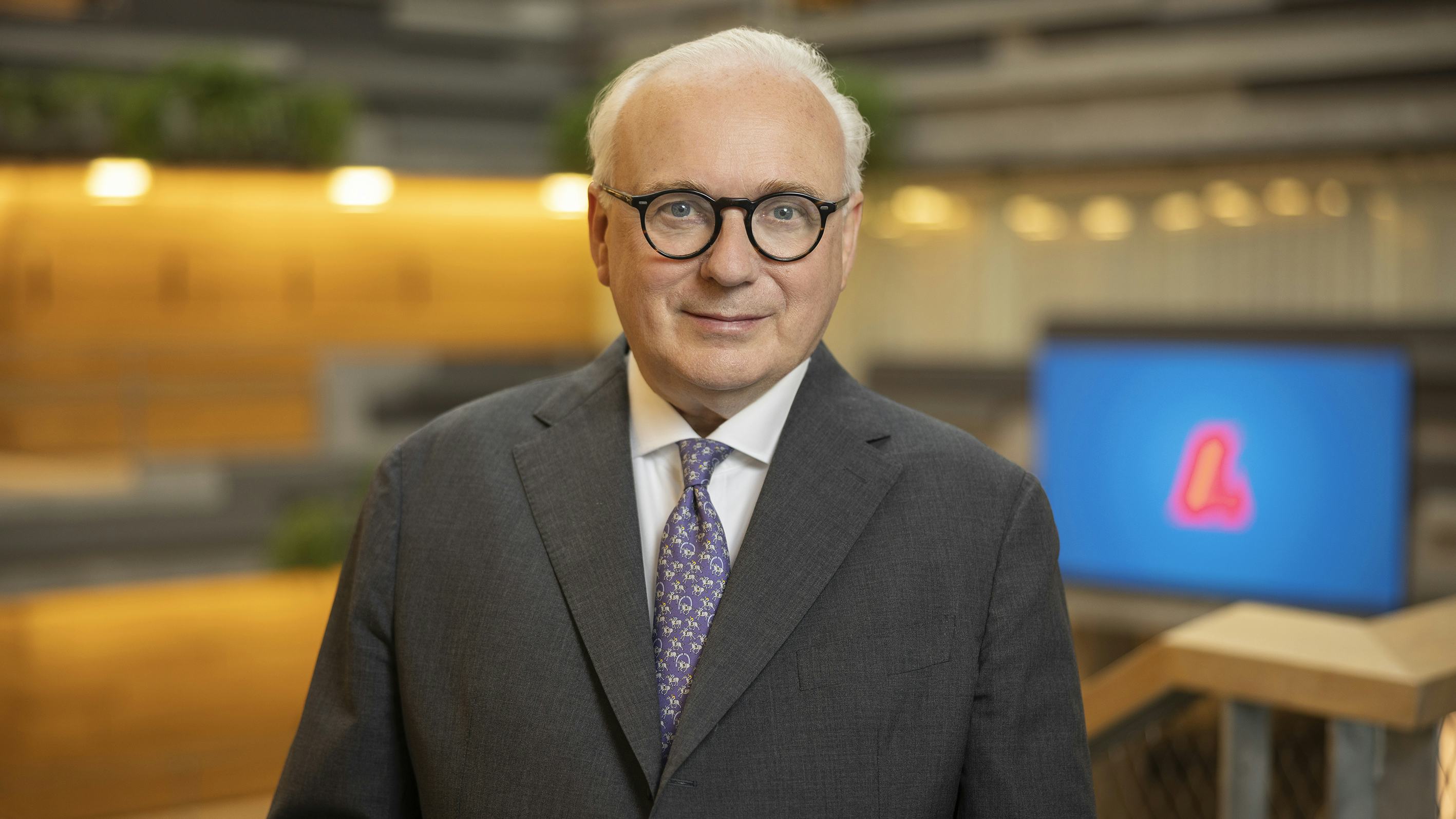
Jón Thorvarður Sigurgeirsson, Chairman of the Board
Bank to an entire nation
Landsbankinn is built on a solid foundation. On 1 July this year, 140 years will have passed since Landsbanki Íslands commenced operations. The establishment of the Bank marked a major milestone in Iceland’s development. Its purpose was to facilitate monetary transactions and support the development of industry, as stated in the legislation establishing the Bank, which was passed by Althingi in 1885. Although Landsbankinn’s activities naturally encompass many more areas today than they did in 1886, this description still largely holds true. The Bank provides financial services to individuals and companies through strong technological solutions, expert staff and an extensive branch network. As before, one of the Bank’s most important roles is to support corporate investment, as such investment provides a foundation for Iceland's economic growth and prosperity. There is little need to elaborate on the profound changes that have taken place in society and in banking over the 140 years since Landsbankinn was founded. In fact, it is not necessary to look very far back in time to see how rapid technological development can transform banking services. Another technological revolution now appears to be just around the corner, and by the time the Bank reaches its 150th anniversary, it can be expected to exhibit even more characteristics of a technology company than it does today.
Strong banks are vital to the economy
At the time of writing this address, inflation has been well above the Central Bank of Iceland’s target for a period of time. It appears that interest rates will decline more slowly than previously hoped and there are certain warning signs regarding economic growth. However, even when conditions deteriorate, it is important to bear in mind that one of the lessons from the Bank’s 140-year history is that there are cycles of both fair weather and foul and the Icelandic economy has proven to be flexible and resilient.
Iceland’s economy has benefited greatly from the global order that has prevailed in recent decades. This applies in particular to international trade, where economies of smaller nations rely heavily on the free exchange of goods and services across borders. The year 2025 was marked by significant turbulence in this field and while there has been a degree of unrest in financial markets, the global economy has proved remarkably resilient. In this context, monetary and fiscal policy, together with investment, particularly in the technology sector, supported global economic growth. So far, there is no indication that the changing global landscape has had a significant impact on the Icelandic economy, but these are early days.
In such circumstances, it is of great importance to have strong banks capable of supporting the operations and investments in domestic entities. In this respect, Landsbankinn is in a league of its own. The Bank’s balance sheet is strong and its credit rating solid. As a result, the Bank continues to support both large corporations undertaking substantial investments and small and medium-sized enterprises requiring more modest financing. The Bank’s position as the leading corporate bank is clearly reflected in its books: Landsbankinn holds approximately 40% of total lending to companies within the banking system. In key industries such as fisheries and construction, the Bank’s market share is around or above 50%. The Bank has also provided strong support for development in the tourism sector, as well as supporting the growth of companies in the high-tech and health technology sectors. It is encouraging that surveys show that corporate customer satisfaction with the Bank’s services is increasing and that the number of customers continues to grow.
Focus on operations
Landsbankinn’s position is also strong in the retail market, where it plays a key role in the residential mortgage market. Following a Supreme Court ruling in regarding interest rate terms in October 2025, it became clear that lenders would need to review the terms of loans with variable interest rates. Subsequently, Landsbankinn amended the provisions of its loan agreements and its residential mortgage offerings, with emphasis placed on acting swiftly and concisely to reduce uncertainty.
The Bank’s strong financial position demonstrates the soundness of its operations. The Bank benefits from having highly capable staff with extensive expertise and a strong relationship with the business community. Landsbankinn's management monitors operations closely, which has meant that costs have not increased alongside rising activity. In addition, technological solutions that have been implemented have created efficiencies for both the Bank and its customers.
The Bank’s cost-income ratio is among the lowest in the banking sector. Furthermore, a healthy risk culture prevails within the Bank, as reflected, among other things, in the strength of its loan portfolio and low levels of non-performing loans.
Growing competition and regulatory burden
Landsbankinn’s strong position should not be taken for granted. Domestic and international competition is increasing, as evidenced by the growing presence of foreign banks in lending operations to larger companies in Iceland. Even so, Landsbankinn has maintained its market share; for example, the Bank’s lending to the marine sector is comparable to that of the other two commercial banks combined. In the coming years, competition is expected to intensify further and it is also likely that foreign financial institutions and fintech companies will increasingly enter the retail market. Competition keeps us focused and highlights the need to continuously improve efficiency and enhance services.
Given this environment, it is important that Icelandic banks are not subject to higher burdens or more onerous regulation than their foreign competitors. On the European mainland, capital requirements were recently reduced for the first time since the global banking crisis and work is underway at the European Central Bank to simplify the regulatory framework. Similar developments are taking place in the United Kingdom and the United States. In Iceland, in the aftermath of the 2008 financial cirisis, conditions called for drastic tightening of the regulatory framework governing bank operations. Now, nearly two decades later, and with business practices having changed fundamentally, it may be time to consider whether regulation can be eased without undermining the resilience of the system.
Historic milestone
A significant milestone was reached last summer when the Bank sold its old headquarters at Austurstræti 11 and three interconnected buildings in the Kvosin area. Austurstræti 11 is closely intertwined with the Bank’s history and it was the last bank building designed by Guðjón Samúelsson that was still held by Landsbankinn. It is gratifying that the buildings will now be given a new role and enter a period of renewal.
During the year, the Bank also completed the acquisition of TM tryggingar hf. The integration of the companies is progressing well and growth opportunities lie in leveraging Landsbankinn’s strong service network to offer comprehensive insurance and financial services to individuals and companies.
Finally, I would like to thank the Board of Directors, employees and management for a rewarding collaboration and strong performance during the year. I also extend my thanks to shareholders and supervisory authorities for constructive and positive cooperation.